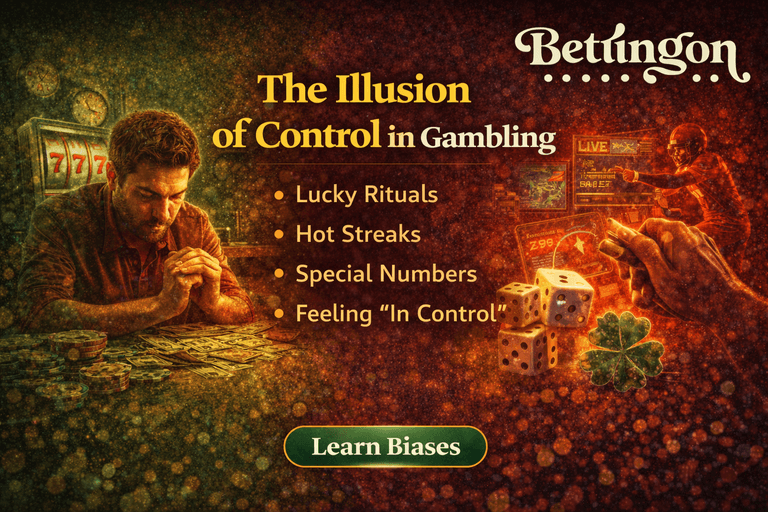
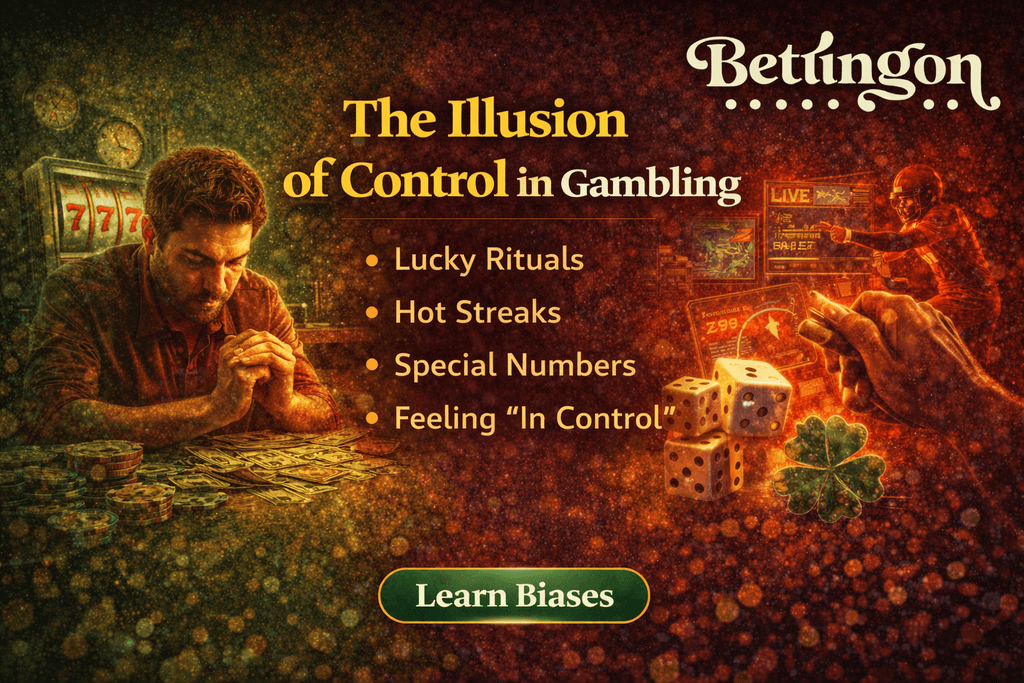
The Illusion of Control in Gambling
Many gamblers believe they have more influence over outcomes than they actually do.
They choose specific numbers.
They follow rituals.
They “feel” when a machine is about to pay.
But in most gambling environments, outcomes are governed by probability — not personal influence.
This psychological effect is called the illusion of control, and it’s one of the most powerful cognitive biases in gambling behavior.
Understanding how this bias works can help players recognize when confidence is replacing logic.
What Is the Illusion of Control?
The illusion of control is a cognitive bias where people believe they can influence outcomes that are actually determined by chance.
This concept was first studied by psychologist Ellen Langer in the 1970s. Her research showed that people often act as if skill or personal choices affect random events.
In gambling environments, this bias becomes particularly strong because games often include elements that feel interactive.
For example:
-
Pressing a slot button
-
Choosing lottery numbers
-
Rolling dice
-
Selecting betting markets
Even when the outcome is already determined by random processes, the act of participation creates a sense of influence.
But perception and reality are not the same.
Why Gambling Feels Controllable
Casinos and betting environments are designed to create engagement.
This doesn’t mean games are unfair — regulated gambling systems rely on certified random number generators and transparent rules.
However, the structure of games often includes interactive elements that make outcomes feel personal.
Examples include:
-
Choosing when to spin
-
Selecting betting strategies
-
Watching near-miss outcomes
-
Following streaks
These features increase immersion, which enhances entertainment.
But they also strengthen the illusion that the player has influence.
Common Examples of the Illusion of Control
The illusion of control appears in many gambling situations.
Slot Machine Timing
Some players believe they can time a spin to trigger a payout.
In reality, slot outcomes are determined by random number generators operating continuously.
The moment you press the button simply reveals a result that probability has already determined.
Lucky Rituals
Players often develop personal rituals:
-
Sitting in the same seat
-
Wearing “lucky” clothing
-
Using specific numbers
These behaviors can create confidence, but they do not alter mathematical probability.
Betting “Systems”
Certain betting systems promise control over outcomes.
Strategies like:
-
Martingale
-
Progressive staking
-
Pattern tracking
may appear logical, but they cannot change underlying probabilities.
They only change exposure to risk.
“Hot” and “Cold” Streaks
Many players believe a machine or team is “due” for a win.
But in independent events, past results do not influence future probabilities.
Each spin, roll, or match begins with the same mathematical odds.
Why the Brain Creates This Bias
The human brain evolved to identify patterns.
Recognizing patterns helped early humans survive by predicting threats and opportunities.
But in modern probability systems, that instinct can misfire.
When we see repeated outcomes, our brain assumes a cause-and-effect relationship — even when randomness is responsible.
This pattern-seeking behavior makes the illusion of control feel convincing.
Especially when wins occur.
The Role of Near Misses
Near misses are particularly powerful psychological triggers.
Imagine a slot machine showing two jackpot symbols and one just above the payline.
It feels like you were close.
But statistically, the result is no different from any other loss.
Near misses activate the same reward circuits in the brain that actual wins do.
This reinforces the belief that the player was “almost successful” and may influence the next outcome.
In reality, the probability remains unchanged.
The Emotional Impact of Control
Feeling in control increases engagement.
Players may feel:
-
More confident
-
More motivated
-
More invested in outcomes
While this enhances entertainment value, it can also encourage riskier behavior if players overestimate their influence.
Believing you control results can lead to:
-
Larger bets
-
Longer sessions
-
Chasing losses
-
Ignoring probability
Recognizing this bias helps maintain realistic expectations.
Skill vs Chance
Not all gambling environments are purely random.
Some activities involve genuine skill elements.
Examples include:
-
Poker strategy
-
Sports betting analysis
-
Advantage play in certain situations
In these cases, knowledge and decision-making can influence long-term results.
However, even skill-based environments still involve variance.
Understanding where skill applies — and where it does not — helps players avoid overconfidence.
Recognizing the Bias in Yourself
The illusion of control is subtle.
Most people don’t realize when it’s affecting their decisions.
Here are some questions that can help identify it:
-
Do you believe certain rituals improve outcomes?
-
Do you feel “due” for a win after losses?
-
Do you trust intuition over probability?
-
Do you feel responsible for random outcomes?
If the answer is yes, cognitive bias may be influencing your thinking.
Awareness is the first step toward better decision-making.
How to Avoid the Illusion of Control
The goal isn’t to remove enjoyment from gambling.
Instead, it’s about maintaining realistic expectations.
Here are some practical safeguards.
Focus on Probability
Understand that outcomes are determined by mathematical odds.
Separate Entertainment From Strategy
Enjoy the experience without assuming control over results.
Avoid Superstitious Thinking
Rituals may feel comforting, but they do not change probability.
Use Bankroll Limits
Structured limits protect against emotional decisions.
Take Breaks
Distance helps reset perspective and prevents bias from building.
Why Understanding Bias Matters
Cognitive biases affect everyone.
Even experienced bettors can fall into psychological traps.
But recognizing biases creates an advantage.
Instead of assuming control where none exists, disciplined players focus on what they can control:
-
bankroll management
-
emotional discipline
-
time spent playing
-
risk exposure
Understanding the illusion of control allows players to approach gambling environments with greater awareness.
Final Thoughts: Learn Biases
Gambling environments are built around probability.
The illusion of control occurs when the brain interprets random outcomes as something personal or controllable.
Recognizing this bias doesn’t reduce enjoyment.
It increases clarity.
Because the smartest players understand the difference between influence and illusion.
Learn the biases.
Play with awareness.
And let probability — not perception — guide your expectations.