⭐ Why Favorites Aren’t Always Safe Bets
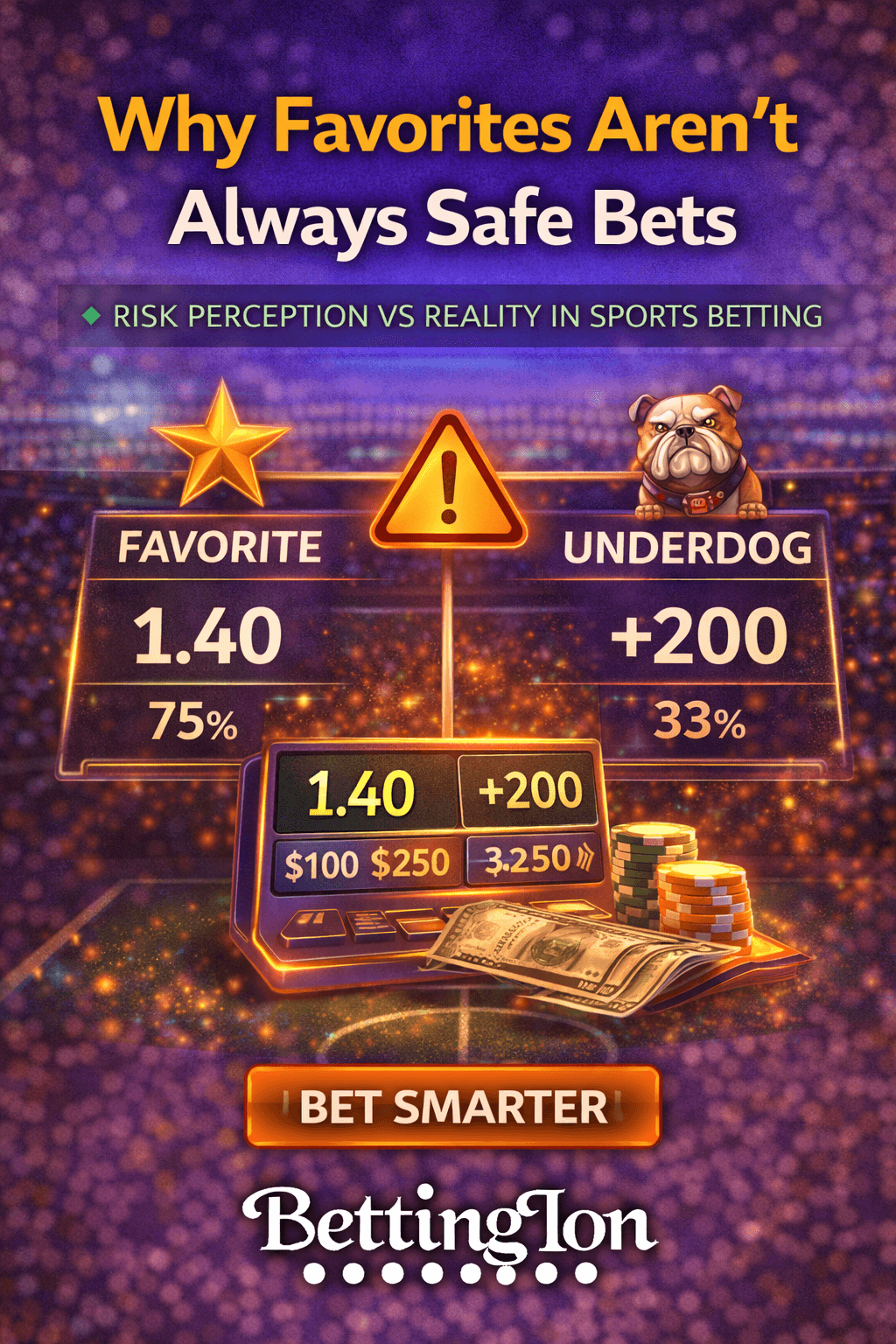
Risk Perception vs Reality in Sports Betting
One of the most common beliefs in sports betting is simple:
“The favorite is the safer bet.”
At first glance, that makes sense. Favorites are expected to win. They’re stronger teams, better-ranked players, or statistically superior sides. But in betting, expected to win doesn’t always mean smart to bet.
Understanding the difference between perception and reality is crucial if you want to bet smarter long term. This guide explains why betting favorites isn’t automatically safe, how bookmakers price favorites, and what smart bettors look for instead.
🎯 Bet Smarter — not just safer.
🎯 1️⃣ What Is a Favorite in Betting?
A favorite is the team or player with the highest implied probability of winning, shown by:
-
Lower decimal odds (e.g., 1.40)
-
Negative American odds (e.g., −200)
-
Short fractional odds (e.g., 1/2)
Favorites win more often than underdogs — that’s true.
But the real question isn’t:
“Will they win?”
It’s:
“Are the odds worth the risk?”
That’s where many bettors go wrong.
📊 2️⃣ High Probability Doesn’t Mean High Value
Let’s look at an example:
-
Favorite odds: 1.20
-
Implied probability: 83%
That means the bookmaker believes this team wins 8 out of 10 times.
But what if the real probability is closer to 75%?
That small gap is where money is lost.
Even though the team wins often, the odds may be too short to offer long-term value.
Winning frequently doesn’t guarantee profitability.
💰 3️⃣ Small Returns, Big Risk Exposure
Favorites often offer low returns:
-
Bet $100 at 1.20 → profit = $20
-
Bet $100 at 1.15 → profit = $15
One upset can wipe out several small wins.
Example:
-
Win 4 bets at 1.20 → +$80
-
Lose 1 bet → −$100
Net result: −$20
That’s why favorites can be deceptively dangerous.
🧠 4️⃣ The Psychological Trap
Favorites feel safer because:
✔️ they’re strong teams
✔️ public confidence is high
✔️ media narratives support them
✔️ casual bettors back them heavily
This creates a psychological bias known as the favorite bias.
Many bettors assume:
“Strong team = easy money.”
Bookmakers know this — and price accordingly.
📈 5️⃣ Bookmakers Adjust for Public Behavior
Favorites attract the majority of bets.
To protect themselves, bookmakers often:
-
slightly shorten favorite odds
-
inflate underdog odds
-
adjust spreads and handicaps
This means favorites can be overpriced, reducing their value.
Smart bettors don’t follow public opinion — they follow probability.
⚖️ 6️⃣ Favorites vs Underdogs: It’s About Price
The debate isn’t about favorites vs underdogs.
It’s about price vs probability.
A favorite can be:
✔️ a great bet at the right odds
❌ a bad bet at inflated odds
Likewise, underdogs can offer:
✔️ value when underpriced
❌ risk when misjudged
Betting isn’t about picking winners — it’s about identifying value.
🎢 7️⃣ Upsets Happen More Than You Think
Sports are unpredictable.
In football, for example:
-
Red cards
-
Injuries
-
Weather conditions
-
Tactical changes
-
Motivation differences
All increase variance.
Even dominant teams lose regularly.
Favorites might win 60–70% of matches — but not 100%.
And the market usually prices them close to perfection.
📉 8️⃣ The Long-Term Impact of Blind Favorite Betting
Let’s say you blindly bet favorites all season.
Even if you win 65% of bets, short odds may prevent profitability.
Example:
-
Average odds: 1.40
-
Win rate: 65%
This might barely break even — or lose money after bookmaker margin.
Consistency matters more than frequency.
🧠 9️⃣ When Betting Favorites Makes Sense
Favorites aren’t “bad bets.”
They’re just not automatically good bets.
Bet a favorite when:
✔️ odds offer value compared to real probability
✔️ motivation is high
✔️ matchup advantages are clear
✔️ market overreacted to recent results
Context matters.
🔎 🔟 Look Beyond the Winner Market
Instead of betting favorites outright, consider:
-
Asian handicaps
-
Draw no bet
-
Over/Under markets
-
Player props
-
Live betting opportunities
Sometimes the better angle isn’t backing the favorite to win — but backing the game situation differently.
🛑 1️⃣1️⃣ Avoid “Safe Bet” Thinking
There’s no such thing as a guaranteed safe bet.
Low odds don’t eliminate risk — they reduce payout.
In fact, the lower the odds:
-
the higher the implied certainty
-
the smaller the margin for error
Smart bettors accept risk — they just manage it better.
🌟 1️⃣2️⃣ Risk Perception vs Reality
Favorites feel safe because they win more often.
But reality shows:
-
value determines profit
-
price matters more than team strength
-
variance always exists
The smartest bettors don’t ask:
“Who is better?”
They ask:
“Are these odds worth it?”
🏁 Conclusion
Favorites aren’t always safe bets — they’re simply teams with higher implied probability.
Low odds can create an illusion of safety, but long-term profitability depends on:
✔️ understanding implied probability
✔️ recognizing bookmaker margins
✔️ avoiding emotional bias
✔️ focusing on value, not reputation
Winning more often doesn’t mean earning more money.
🎯 Bet Smarter — and think probability, not popularity, on BettingIon.
Related Posts